
CROP-HAIL INSURANCE
Crop-Hail Insurance
Hail can damage agricultural production in a matter of minutes. A storm may affect one field, orchard or vineyard—or only part of it—while nearby acreage experiences little or no damage.
Crop-Hail insurance is private insurance designed to provide protection against direct physical crop damage caused by hail and any other perils specifically identified in the policy. It is separate from federally reinsured Multi-Peril Crop Insurance and may, when available and appropriate, be used alongside an MPCI policy as part of an operation’s broader risk-management strategy.
Coverage is subject to the terms, conditions, limitations, exclusions, deductibles and underwriting requirements of the issuing insurance company.
Coverage for Localized Damage
Hail damage can be highly localized. Depending on the policy form, Crop-Hail coverage may be written and adjusted using acreage-specific values and loss determinations.
This may provide a different form of protection from an MPCI policy, under which losses are generally determined according to the applicable insured unit, production-to-count rules and federal policy provisions.
The interaction between Crop-Hail coverage and MPCI varies according to the policies involved. Producers should not assume that damage resulting in a Crop-Hail claim will also result in an MPCI indemnity, or that the absence of an MPCI indemnity will necessarily result in payment under a Crop-Hail policy.
Each claim is evaluated independently under the applicable policy.
Coverage Amounts and Policy Options
Depending on the crop, location, insurance company and policy offered, a producer may be able to select an amount of insurance per acre and choose from available deductible or coverage structures.
Potential policy features may include:
- An amount of insurance selected for eligible acreage
- Full-coverage or deductible-based options
- Different deductible structures
- Coverage for additional specifically named perils
- Crop-specific policy provisions or endorsements
Not every feature is available for every crop or location. Terms and terminology also vary among insurance companies.
Boman & Associates can help producers compare available alternatives, but the issuing insurance company determines whether coverage is offered, whether an application is accepted and what policy terms apply.
Perils Covered by the Policy
Hail is the principal peril addressed by Crop-Hail insurance. Some policies or endorsements may also insure fire or other specifically named perils.
Additional perils are not automatically covered. A loss is covered only when the applicable policy or endorsement identifies the cause of loss as insured and all relevant policy requirements have been satisfied.
Crop-Hail insurance should not be understood as providing the same broad yield, revenue or crop-value protection that may be available through an MPCI policy. Crop-Hail policies generally address direct physical damage from the named perils stated in the private insurance contract.
Damage involving quality, marketability, disease, insects, smoke, transit, wind, vandalism, inability to harvest or other conditions should not be assumed to be covered unless the policy expressly provides such protection.
Crop-Hail Insurance in California and Arizona
Crop-Hail products may be available for certain agricultural commodities grown in California and Arizona. Eligibility varies by insurance company, crop, county, acreage, production practice and underwriting requirements.
Depending on the carrier and current product offerings, eligible commodities may include certain:
- Field crops
- Cotton crops
- Forage crops
- Vegetable crops
- Grapes and other fruit crops
- Tree nuts
- Citrus crops
- Other specialty crops
This list is illustrative only. It does not represent a promise that coverage is available for a particular crop, variety, practice, county or operation.
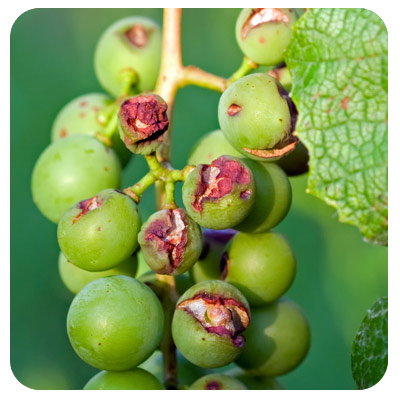
Hail may affect crops in different ways, including damage to plants, leaves, stems, fruit or nuts. The presence of visible damage does not by itself establish the amount of an insured loss.
Any loss percentage or claim amount is determined by the insurance company in accordance with the applicable policy, crop-specific procedures, stage of development, inspections, appraisals, deductibles and other loss-adjustment requirements.
Applying for Coverage During the Growing Season
Crop-Hail insurance may, depending on the insurance company and applicable underwriting requirements, be available after the growing season has begun.
Coverage is not retroactive. Completing or submitting an application does not necessarily mean that insurance is immediately in effect.
The insurance company may require an inspection, impose a waiting period, decline an application, exclude existing damage or delay the effective date of coverage. Coverage begins only when it has been accepted and becomes effective under the terms established by the issuing company.
No coverage applies to damage that occurred before the policy’s effective date. Producers should obtain confirmation of coverage and its effective date rather than relying solely on submission of an application or a discussion with an agent.
Coordinating Crop-Hail Insurance with MPCI
Crop-Hail insurance and MPCI are separate contracts that address risk in different ways.
Depending on the plan selected, MPCI may provide protection based on yield, revenue, crop value or an area-based index. Crop-Hail insurance generally focuses on direct physical crop damage caused by hail and any additional perils expressly named in the private policy.
For example, hail might damage acreage within a larger MPCI unit. Production from other acreage in that unit could affect whether the MPCI policy produces an indemnity. A separate Crop-Hail policy would evaluate the event according to its own coverage amount, acreage, deductible, insured perils and loss-adjustment provisions.
This example is for general illustration only. It does not predict whether either policy would cover a particular event or result in an indemnity.
Factors to Consider
When evaluating Crop-Hail insurance, producers may wish to consider:
- The crop and acreage proposed for insurance
- The amount of insurance under consideration
- Available deductible structures
- The crop’s value and potential financial exposure
- The operation’s existing MPCI coverage and unit structure
- The named perils included in the private policy
- Policy exclusions and limitations
- The proposed effective and termination dates
- Premium, billing and cancellation provisions
- Notice-of-loss requirements
- Inspection, appraisal and claim procedures
Coverage decisions should be based on the complete policy terms rather than premium alone. A deductible or limitation that lowers the cost of coverage may also increase the portion of a loss retained by the producer.
Reporting Possible Crop Damage
Producers who believe an insured crop may have been damaged should promptly review the applicable policy and contact Boman & Associates.
Notice requirements and deadlines vary by insurance company and policy. Failure to provide timely notice or preserve the insurance company’s opportunity to inspect the crop may affect a claim.
Before destroying, replanting, abandoning, harvesting differently than originally intended, removing or putting damaged acreage to another use, producers should obtain instructions from the insurance company or its authorized representative.
Producers should not interpret this page as authorization to alter damaged acreage. Any required consent, inspection or appraisal must be obtained in accordance with the applicable policy.
Records, photographs, maps, production information and other documentation may be helpful, but the insurance company determines what information is required to evaluate a claim.
Crop-Hail Guidance from Boman & Associates
Boman & Associates assists California and Arizona producers in reviewing available Crop-Hail insurance alternatives and considering how private coverage may fit with an existing risk-management program.
We can help producers discuss crop values, acreage, potential exposures, available coverage structures and the relationship between Crop-Hail insurance and MPCI. Recommendations are based on the information provided by the producer and the insurance products available at the time of the review.
Boman & Associates does not determine whether a loss is covered or establish the amount of a claim payment. Coverage determinations, inspections, appraisals and indemnity calculations are made by the issuing insurance company in accordance with the applicable policy.
Product availability, underwriting acceptance, rates, deductibles, covered perils, exclusions and claim requirements vary by insurance company, crop, location and policy period.
The application, declarations, policy, endorsements and other documents issued by the insurance company control in the event of any difference between those documents and the general information presented on this website.
Contact Boman & Associates to discuss Crop-Hail insurance options that may be available for your operation.